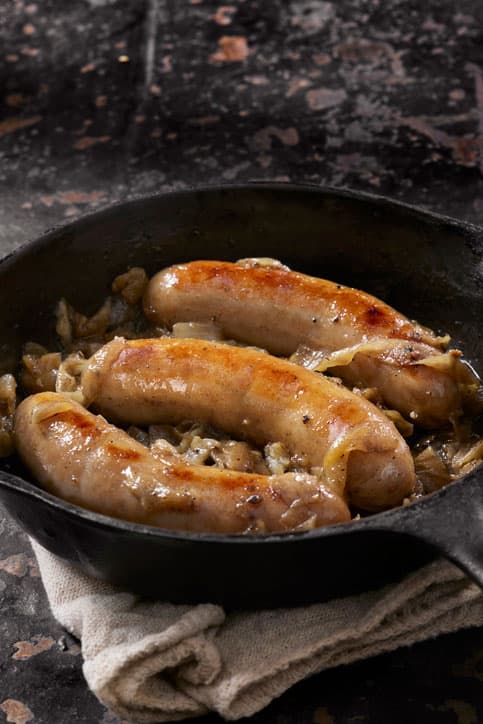
German sausages pair well with drinks that refresh the palate, balance their richness and complement their seasoning. Beer is the traditional choice, but it is far from the only suitable option. Dry cider, crisp white wine, light red wine, sparkling drinks and well-chosen alcohol-free alternatives can all work extremely well.
The best pairing depends on the sausage itself. A delicate bratwurst needs a different drink from a smoky bockwurst or a spicy sausage served with mustard and sauerkraut. The cooking method, sauce and side dishes also influence the choice.
A lightly grilled sausage may suit a clean lager or dry Riesling, while a deeply smoked variety can stand up to a darker beer or fuller-flavoured cider. Rich toppings often benefit from acidity or carbonation, which help prevent the meal from feeling heavy.
Rather than looking for one universal drink, it is more useful to consider the dominant characteristics of the plate. Is the sausage mild, smoky, peppery, spicy or rich? Is it served with sharp mustard, sweet onions, creamy potato salad or tangy sauerkraut?
Once those details are clear, choosing the right drink becomes much easier.
Why is beer traditionally served with German sausages?
Beer and sausages have long been associated with German food culture because their flavours and textures naturally complement one another.
Sausages often contain a combination of meat, fat, salt, herbs and spices. Beer can provide bitterness, carbonation and grain-led sweetness, all of which help balance those elements.
Carbonation is particularly useful. The bubbles refresh the mouth between bites and reduce the sense of richness created by pork fat, melted cheese or creamy accompaniments.
Bitterness can also balance sweet onions, bread rolls and caramelised surfaces. Maltier beers complement roasted flavours without overwhelming a mildly seasoned sausage.
Beer is also practical for informal meals. It works naturally with grilled food, shared platters and outdoor dining, which helps explain its close association with sausage festivals and beer halls.
However, not every beer suits every sausage. A heavily hopped beer can overpower a mild bratwurst, while a very light lager may disappear beside an intensely smoked or spicy sausage.
Which beer styles pair best with German sausages?
The ideal beer should support the sausage rather than dominate it.
Several traditional and widely available beer styles work well, but their suitability depends on the recipe and preparation.
Pilsner with bratwurst
A crisp pilsner is one of the most versatile choices for bratwurst.
Its light body, dry finish and moderate bitterness refresh the palate without covering the sausage’s seasoning. This is particularly useful with a traditional pork bratwurst flavoured with herbs such as marjoram, nutmeg or white pepper.
Pilsner also complements:
- Mustard
- Sauerkraut
- Bread rolls
- Potato salad
- Grilled onions
The clean finish allows each part of the meal to remain distinct.
A highly bitter modern craft pilsner may be more assertive than a traditional example, so consider the sausage’s strength before serving.
Helles lager with mild sausages
Helles is a pale German lager with a softer, maltier character than many pilsners.
It usually has restrained bitterness and a smooth, rounded flavour. This makes it especially suitable for delicately seasoned sausages.
A helles can pair well with:
- Mild bratwurst
- Weisswurst
- Lightly seasoned pork sausages
- Sausages served with bread and mild mustard
Because the beer is not excessively bitter, it supports rather than competes with subtle flavours.
It can also work well when the sausage is accompanied by creamy potato salad, as the carbonation cuts through the richness while the malt complements the potatoes.
Wheat beer with weisswurst
German wheat beer, particularly weissbier or hefeweizen, is a classic partner for weisswurst.
These beers often have soft fruit, spice and bread-like flavours. Notes resembling banana, clove and yeast can complement the gentle seasoning of a pale sausage.
The fuller texture also suits the soft character of weisswurst, while the carbonation keeps the pairing lively.
Wheat beer can also work with:
- Light bratwurst
- Sausages served with sweet mustard
- Pretzels
- Mild cheeses
- Salads with apple or fennel
It may be less suitable for an aggressively smoked sausage, where its delicate fruit and spice could be lost.
Märzen with grilled bratwurst
Märzen is a malt-forward lager traditionally associated with autumn festivals.
Its toasted, bready and lightly caramelised flavours make it well suited to grilled bratwurst. The browned surface of the sausage reflects the toasted character of the beer, creating a natural connection.
Märzen can be particularly effective with:
- Caramelised onions
- Pretzels
- Roasted potatoes
- Mustard
- Grilled peppers
The beer has more body than a pilsner but usually remains balanced enough to avoid making the meal feel too heavy.
Bock beer with bockwurst
Bockwurst and bock beer are often linked by name and tradition.
Bock beer is generally stronger, darker and maltier than a pale lager. Its rich bread, caramel and toasted flavours can complement the smoke and seasoning of bockwurst.
This pairing works best when the sausage has enough character to stand up to the beer. A very mild sausage may be overwhelmed by a strong Doppelbock or heavily roasted version.
A standard bock can pair well with:
- Smoked bockwurst
- Dark bread
- Mustard
- Braised cabbage
- Roasted root vegetables
Because both the drink and sausage can be rich, smaller servings and sharp accompaniments help maintain balance.
Dunkel with smoky sausages
Dunkel is a dark German lager with flavours that may suggest toasted bread, caramel, nuts and light chocolate.
It can be an excellent choice for smoky or deeply browned sausages because the roasted malt echoes the cooking flavours.
Unlike a heavy stout, dunkel is usually smooth and relatively refreshing. This allows it to complement the food without becoming too intense.
It can work with:
- Smoked sausages
- Bockwurst
- Sausages served with onion gravy
- Braised red cabbage
- Roasted mushrooms
A sharp mustard or pickled accompaniment can prevent the combination from becoming overly sweet.
Rauchbier with strongly smoked sausage
Rauchbier is made using smoked malt and has a distinctive wood-smoke character.
It can create a powerful pairing with smoked sausages, especially when the meal is intended to emphasise traditional smokehouse flavours.
However, this combination can also become intense. If both the beer and sausage are heavily smoked, more delicate flavours may disappear.
Rauchbier works best with simple sides such as bread, cabbage or potatoes rather than several additional strong sauces.
It can also provide an interesting contrast with a milder sausage, allowing the beer to supply most of the smoky character.
Should you serve IPA with German sausages?
India pale ale can work with spicy or strongly seasoned sausages, but it is not always the safest option.
The bitterness of an IPA can cut through fat, while citrus or tropical hop flavours may complement chilli, garlic and herbs.
However, high alcohol and strong bitterness can intensify chilli heat. A very hoppy beer may also overpower a delicate German sausage.
IPA is more likely to work with:
- Spicy sausages
- Chilli mustard
- Barbecue-style toppings
- Strongly grilled sausages
- Sharp pickles
A lower-alcohol pale ale may provide a more balanced alternative when the sausage is moderately seasoned.
Can wine pair well with German sausages?
Wine can pair extremely well with sausages, particularly when its acidity balances the meat’s richness.
The idea that sausages should only be served with beer is unnecessarily restrictive. Many German wine regions produce fresh, food-friendly wines that complement pork, smoke, mustard and cabbage.
The most successful wines are usually dry or only lightly sweet, with enough acidity to refresh the palate.
Riesling with bratwurst and sauerkraut
Dry Riesling is one of the best wine choices for German sausages.
Its high acidity works well with fatty pork, while citrus, apple and mineral flavours complement sauerkraut, mustard and herbs.
A dry Riesling can pair with:
- Bratwurst
- Bockwurst
- Sausages served with sauerkraut
- Pork sausages with apple
- Mustard-based sauces
A slightly off-dry Riesling can be useful when the dish contains noticeable heat. The small amount of sweetness helps soften chilli without turning the pairing into a dessert-like combination.
Very sweet Riesling is generally less suitable unless the food itself contains strong sweet and spicy contrasts.
Pinot Gris with mild sausages
Pinot Gris or Pinot Grigio can work with lighter, gently seasoned sausages.
Crisper styles provide freshness, while fuller Pinot Gris may have enough texture for creamy potato salad or buttery accompaniments.
This wine is a good option when the sausage seasoning is subtle and the meal includes:
- Roast vegetables
- Apple
- Fennel
- Creamy sauces
- Light mustard
Avoid heavily oaked examples, which can overpower a straightforward sausage dish.
Grüner Veltliner with herbs and mustard
Although most closely associated with Austria, Grüner Veltliner is an excellent match for Central European sausage dishes.
Its crisp acidity, citrus character and peppery edge can complement herb-seasoned pork and mustard.
It works particularly well with fresh green accompaniments, cabbage and lightly pickled vegetables.
A dry, youthful style is normally preferable to a richer, mature wine for informal sausage dishes.
Sparkling wine with rich sausages
Dry sparkling wine can be surprisingly effective with sausages.
The combination of acidity and bubbles helps cleanse the palate, making it suitable for rich, fatty or fried preparations.
A dry sparkling wine can work with:
- Sausage rolls
- Fried sausages
- Käsekrainer or cheese-filled sausages
- Mustard
- Salty snacks
- Crispy onions
The wine should be dry enough to avoid making the savoury food taste flat.
Sparkling wine can also make a casual sausage meal feel more celebratory without requiring complicated preparation.
Light red wine with grilled sausages
A light, fruity red wine can pair with grilled or roasted sausages, especially when the plate includes onions, mushrooms or tomato-based accompaniments.
Pinot Noir is one of the most suitable choices. It generally offers moderate tannins and enough acidity to balance pork without creating a harsh metallic sensation.
A light red can work with:
- Grilled bratwurst
- Smoky sausages
- Caramelised onions
- Mushroom sauces
- Roasted root vegetables
Serve the wine slightly cool rather than at a warm room temperature. This keeps the pairing fresher and more suitable for a rich dish.
Very tannic red wines are often less successful. Strong tannins can make salty sausages taste drier and may overwhelm delicate seasoning.
Does cider pair well with German sausages?
Dry cider is an excellent partner for pork sausages.
Apple has a natural affinity with pork, while cider’s acidity and carbonation balance fat and salt. It can provide many of the refreshing qualities of beer while offering a fruitier flavour.
Dry or medium-dry cider works particularly well with:
- Pork bratwurst
- Sausages served with apple sauce
- Mustard
- Cabbage
- Caramelised onions
- Roast potatoes
A very sweet cider can make barbecue sauce, onions or sweet mustard feel excessive. Drier styles are usually more versatile.
Cloudy traditional cider may have earthy, tannic qualities that complement rustic sausages. A lighter sparkling cider suits milder products and summer meals.
Perry, made from pears, can also work well with delicately seasoned pork sausages. Its subtle fruit and acidity provide contrast without dominating the food.
What non-alcoholic drinks pair well with German sausages?
Alcohol is not necessary for a successful pairing.
A good alcohol-free drink should provide freshness, acidity, bitterness or fruit, depending on the sausage and accompaniments.
Alcohol-free beer
Alcohol-free lager, wheat beer and pale ale can offer many of the same flavour benefits as standard beer.
A crisp alcohol-free lager works with bratwurst and bockwurst, while an alcohol-free wheat beer suits milder sausages and sweet mustard.
Check the flavour profile rather than choosing only by category. Some alcohol-free beers are sweeter than their alcoholic equivalents, which may affect the balance.
Apple juice and sparkling apple drinks
Cloudy apple juice pairs naturally with pork, but it can be quite sweet.
Serving it chilled, diluting it with sparkling water or choosing a sharper pressed apple drink can create a more refreshing match.
Sparkling apple juice is particularly suitable for:
- Bratwurst
- Pork and apple sausages
- Mustard
- Potato salad
- Cabbage dishes
Sharp apple varieties usually work better than very sweet drinks.
Sparkling water with citrus
Sparkling water is simple but effective.
The carbonation refreshes the palate, while lemon can provide acidity. It is especially useful when the meal contains several sauces and you do not want the drink to add another dominant flavour.
A slice of lemon, lime or cucumber can make the drink feel more complete without interfering with the food.
Ginger beer
Ginger beer can pair with spicy or smoky sausages.
Its warming spice complements pepper, chilli and mustard, while carbonation cuts through fat.
A dry ginger beer is usually preferable because heavily sweetened versions can make the meal feel cloying.
It works particularly well with:
- Spicy bratwurst
- Smoky sausages
- Hot mustard
- Chilli sauces
- Pickled vegetables
Check whether the ginger beer is alcoholic or non-alcoholic, as both versions are available.
Elderflower and herbal drinks
A lightly sweet elderflower drink can suit mild sausages served with fresh salads, apple or cucumber.
Herbal and botanical soft drinks can also work when they have enough acidity and are not overly perfumed.
These are less suitable for heavily smoked sausages, which can overwhelm delicate floral flavours.
Iced tea
Unsweetened or lightly sweetened iced tea can provide tannin and freshness.
Black tea with lemon works well with grilled food, while apple or herbal teas may complement lighter sausage dishes.
Avoid extremely sweet bottled teas, particularly when the meal already includes sweet onions or barbecue sauce.
How do sauces affect the drink pairing?
The sauce may influence the pairing as much as the sausage.
A mild bratwurst served with hot mustard needs a different drink from the same sausage covered in sweet barbecue sauce.
Mustard
Sharp mustard pairs well with drinks that have freshness and moderate sweetness.
Pilsner, dry Riesling, cider and sparkling apple drinks can all balance mustard’s heat and acidity.
Very bitter beer may make an intense mustard seem harsher, so balance is important.
Sauerkraut
Sauerkraut is sour, salty and fermented.
High-acid drinks such as Riesling, cider and crisp lager can work well because they match its freshness rather than being flattened by it.
Low-acid, heavily oaked wine is usually less successful.
Onion gravy
Rich onion gravy suits maltier beer or a light red wine.
Dunkel, Märzen and Pinot Noir can complement the sweet, roasted character of the onions.
A very delicate drink may disappear beside the sauce.
Sweet barbecue sauce
Sweet barbecue sauce needs a drink with enough bitterness, acidity or spice to prevent the combination from becoming cloying.
Pale ale, dry cider, ginger beer or an off-dry Riesling can work, depending on the heat level.
Avoid pairing an already sweet sauce with an equally sweet drink unless the serving is small.
Cheese-filled sausages
Cheese-filled sausages are especially rich and salty.
A crisp pilsner, dry sparkling wine or sharp cider can cleanse the palate. Dark, sweet drinks may make the combination feel too heavy.
How do side dishes change the pairing?
A sausage is rarely served alone, so the complete plate should guide the drink.
Potato salad with a creamy dressing benefits from carbonation and acidity. A vinegar-based potato salad can handle a slightly softer drink because the food already provides sharpness.
Sauerkraut suits crisp beer, cider and acidic white wine. Braised red cabbage may work better with a maltier beer or fruity red wine, particularly when it includes apple or warming spices.
Pretzels and bread complement malt-driven beer because both share toasted grain flavours.
Roasted vegetables can broaden the wine options, while spicy pickles favour refreshing drinks with moderate sweetness.
The drink should support the entire meal rather than match only the meat.
What should you serve at a German sausage tasting?
A tasting provides an opportunity to compare several sausages and drinks.
Rather than offering a full glass with every sample, serve small portions so guests can assess the combinations comfortably.
A simple tasting might include:
- Mild bratwurst with helles lager
- Grilled bratwurst with Märzen
- Smoked bockwurst with dunkel
- Spicy sausage with dry cider
- Cheese-filled sausage with sparkling wine
- Alcohol-free bratwurst pairing with apple spritz
Provide water and plain bread between samples. This helps clear the palate and makes differences easier to notice.
Serve condiments separately so guests can compare the sausage alone before adding mustard, sauerkraut or sauce.
It is also helpful to label the sausages and drinks clearly, particularly when allergens or alcohol content need to be communicated.
Frequently Asked Questions
What is the best beer to serve with bratwurst?
Pilsner, helles and Märzen are all strong choices. Pilsner is crisp and refreshing, helles suits mild sausages, and Märzen complements grilled or caramelised flavours.
What wine goes with bratwurst?
Dry Riesling is one of the most versatile options because its acidity balances pork fat and works well with mustard and sauerkraut. Light Pinot Noir can also suit grilled bratwurst.
Can you drink red wine with German sausages?
Yes. Choose a light, fresh red with moderate tannins, such as Pinot Noir. Heavy, tannic reds may overpower mild sausages and make salty flavours seem harsher.
What drink goes well with spicy sausage?
An off-dry Riesling, pale ale, dry cider or ginger beer can work well. A small amount of sweetness helps balance chilli, while carbonation refreshes the palate.
What alcohol-free drink is best with bratwurst?
Alcohol-free lager, sparkling apple juice, apple spritz and sparkling water with lemon are all suitable. The best choice depends on the mustard, sauce and side dishes.
Choosing the right drink for German sausages
The best drink pairing depends on the sausage’s seasoning, texture and cooking method, as well as everything served alongside it.
Crisp lager is a dependable choice for mild bratwurst, while maltier beers suit grilled and smoked sausages. Wheat beer works well with delicate pale sausages, and dry cider provides a refreshing apple-led partner for pork.
Wine can be equally successful. Dry Riesling complements sausage, mustard and sauerkraut, while light Pinot Noir suits browned meat and onions. Sparkling wine is especially effective with rich, fried or cheese-filled sausages.
Alcohol-free beer, sharp apple drinks, ginger beer and sparkling water offer equally enjoyable alternatives.
The most important principle is balance. Rich sausages benefit from acidity and carbonation. Spicy sausages need a drink that refreshes without intensifying the heat. Delicate products require subtle drinks, while smoked varieties can support deeper malt, fruit and roasted flavours.
Franconian Sausage Co. produces premium sausages and speciality meat products using high-quality ingredients and authentic recipes developed in-house. Fresh, made-to-order products are available for restaurants, caterers, trade customers and members of the public.
Phone: 01892 837816
Email: orders@franconian.co.uk
Find out more: https://franconian.co.uk/