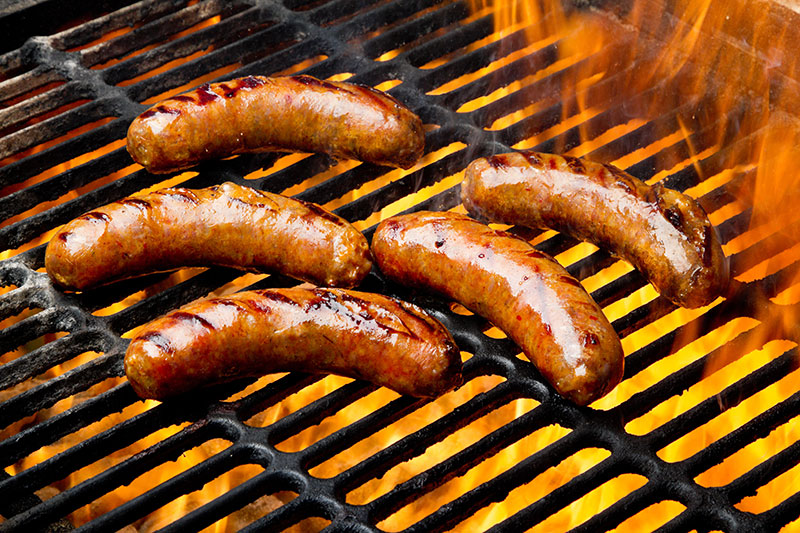
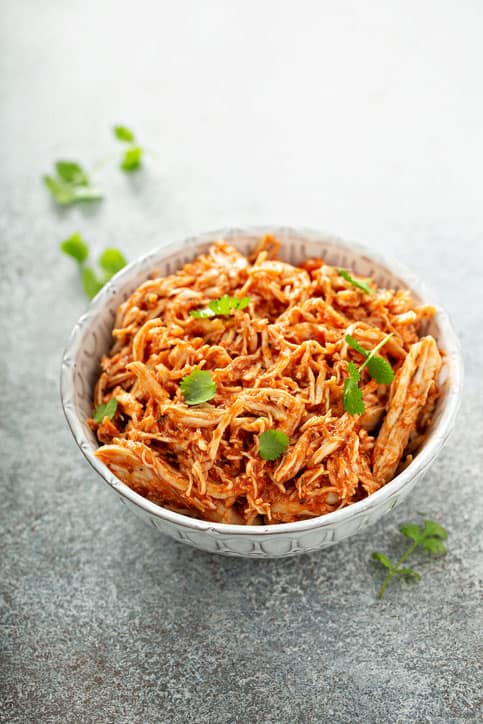
What makes chorizo different from other sausages is primarily its distinctive seasoning, particularly paprika, alongside the preparation methods that give different varieties their characteristic flavour and texture.
Traditional Spanish chorizo is commonly made from pork, pork fat, garlic, salt and paprika. Depending on the variety, it may be cured, dried or smoked, producing anything from a firm slicing sausage to a softer product intended for cooking.
This makes chorizo quite different from many familiar British sausages, which are generally sold fresh and rely on different combinations of herbs and seasonings.
However, not all chorizo is the same. Spanish chorizo differs considerably from Mexican chorizo, and even within Spain there are regional variations in seasoning, texture and production.
Understanding these differences helps explain why chorizo works so well in certain dishes, how to select the correct variety and why it cannot always be substituted directly for another sausage.
What ingredients make chorizo distinctive?
The ingredients used in chorizo are relatively straightforward, but their combination produces a recognisable flavour.
Traditional Spanish chorizo generally contains pork, pork fat, garlic, paprika and salt.
Other spices may be included depending on the region and recipe.
The main difference from many other sausages is the prominent role of paprika.
This contributes colour, flavour and, depending on the variety used, varying levels of warmth or heat.
Why is paprika important?
Paprika is produced from dried and ground peppers.
Different varieties offer different flavours, from relatively mild and sweet to distinctly hot.
Some paprika is smoked during production, which introduces a deeper, smoky character.
Spanish chorizo commonly uses pimentón, a type of paprika strongly associated with Spanish cooking.
The seasoning contributes to the sausage’s familiar reddish colour.
It also helps create the rich, savoury flavour that distinguishes chorizo from sausages seasoned primarily with herbs, pepper or other spices.
Does all chorizo contain the same paprika?
No.
Different regional recipes use different quantities and varieties of paprika.
Some chorizos are mild and aromatic, while others have a much stronger heat.
Smoked paprika can contribute a particularly distinctive flavour, but the smoking of the paprika and the smoking of the sausage itself are separate processes.
A sausage can contain smoked paprika without undergoing a smoking process.
Equally, a chorizo may be smoked during manufacture.
This distinction is important because it influences how the finished sausage tastes.
What role does garlic play?
Garlic is another defining ingredient in many traditional Spanish chorizo recipes.
It provides a savoury, aromatic flavour that complements the paprika and pork.
However, garlic alone does not distinguish chorizo from other sausages.
Many European sausage varieties contain garlic.
For example, French Toulouse sausages are also known for their garlic seasoning.
The distinctive character of chorizo comes from the overall combination of ingredients and production methods rather than any single ingredient in isolation.
Why does chorizo have such a strong red colour?
The reddish colour of Spanish chorizo comes mainly from paprika.
The pigments in the peppers used to produce paprika contribute orange and red tones to the sausage mixture.
When the paprika is distributed through the minced pork and fat, it gives the finished product its characteristic appearance.
The depth of colour depends on the quantity and type of paprika used.
A chorizo containing a substantial proportion of strongly coloured paprika may have a deeper red appearance than a milder variety.
However, colour alone is not a reliable measure of quality or spiciness.
A deeply coloured chorizo is not necessarily hotter than a lighter one.
Likewise, the intensity of its colour does not automatically indicate how long it has been cured.
Does the red colour affect cooking?
When chorizo is fried, some of the paprika pigments can transfer into the rendered fat.
This creates the familiar red or orange oil often seen when preparing chorizo-based dishes.
That coloured fat can contribute flavour and appearance to surrounding ingredients.
For example, frying pieces of cooking chorizo before adding onions, peppers or tomatoes can help distribute its seasoning throughout a dish.
This is one reason why chorizo is particularly useful in rice dishes, stews and pasta recipes.
Rather than functioning only as a separate meat component, it can help season the ingredients around it.
What is the difference between fresh, cured and semi-cured chorizo?
One of the most important differences between chorizo and other sausages is the variety of ways it can be prepared.
Chorizo is not a single product with one standard texture or cooking requirement.
It can be sold fresh, cured or semi-cured.
Each type behaves differently.
Fresh chorizo
Fresh chorizo is made from seasoned meat that has not undergone the extended curing and drying process associated with firm, ready-to-eat varieties.
It generally has a softer texture.
Fresh chorizo is intended to be cooked before eating.
It can be fried, grilled or incorporated into dishes where the meat is cooked as part of the recipe.
Depending on the casing and style, the filling may also be removed and crumbled into a pan.
This makes fresh chorizo suitable for dishes where a softer, more dispersed sausage texture is desirable.
Fully cured chorizo
Fully cured chorizo undergoes a controlled curing and maturation process.
Depending on the variety, this may involve salting, fermentation, drying and sometimes smoking.
These processes affect flavour, moisture content and texture.
The finished product is often firmer and more concentrated in flavour than fresh chorizo.
Many fully cured varieties are sold ready to eat and can be sliced for tapas, sandwiches and sharing boards.
However, not every sausage described as cured is necessarily ready to eat without cooking.
The specific product instructions remain important.
Semi-cured chorizo
Semi-cured chorizo sits between fresh and fully cured styles in terms of processing and texture.
It has undergone some curing but has not necessarily developed the same firmness or shelf stability as a fully dried sausage.
This can make it useful in cooked dishes where a slightly firmer texture and more developed flavour are desirable.
Franconian Sausage Co. produces Semi-cured Chorizo using pork, Spanish paprika and its own spice blend.
The sausages are made and smoked on site, producing a smoky and gently spicy flavour.
Franconian’s semi-cured product must still be cooked before serving.
The recommended preparation is to bake, fry or grill it until the core temperature reaches 75°C.
This illustrates why the term semi-cured should never be interpreted as meaning that a sausage is automatically ready to eat.
What is the difference between Spanish and Mexican chorizo?
Spanish and Mexican chorizo share historical connections, but the products have developed into noticeably different styles.
Spanish chorizo
Spanish chorizo is strongly associated with pork, garlic and paprika.
Many varieties are cured or semi-cured, although fresh versions are also produced.
Depending on the style, Spanish chorizo may be relatively firm and suitable for slicing.
Its flavour is commonly characterised by paprika, garlic and sometimes smoke.
Fully cured varieties can be served cold where the product is labelled ready to eat, while cooking varieties are used in stews, rice dishes and other meals.
Mexican chorizo
Mexican chorizo is more commonly sold as a fresh sausage.
It is often seasoned with chillies, vinegar and other spices.
Unlike many Spanish varieties, its flavour is not necessarily dominated by smoked paprika.
Mexican chorizo is usually cooked thoroughly before eating.
It is frequently removed from its casing and crumbled into a pan, making it suitable for tacos, eggs, potatoes and other dishes.
Its softer texture allows the seasoned meat to become integrated into the surrounding ingredients.
Why does this difference matter?
Consider preparing a dish that requires crumbled Mexican chorizo.
Using a firm Spanish cured chorizo would produce a completely different result.
The Spanish sausage might retain its shape in slices or cubes, while fresh Mexican chorizo would break down into smaller pieces.
Similarly, a tapas recipe calling for thin slices of fully cured Spanish chorizo would not work in the same way with raw Mexican chorizo.
The two products may share a name, but their intended uses are different.
How does chorizo compare with other popular sausages?
Chorizo is part of a much wider family of seasoned meat products.
Comparing it with other sausages helps identify what makes it distinctive.
| Sausage | Typical characteristics | Main difference from chorizo |
|---|---|---|
| Chorizo | Pork, paprika, garlic; fresh or cured varieties | Paprika-led seasoning and varied curing methods |
| British pork sausage | Fresh sausage seasoned with herbs or spices | Usually softer and less paprika-focused |
| Bratwurst | German-style sausage, commonly pork-based | Generally milder seasoning |
| Salami | Cured sausage with regional variations | Often pepper, garlic or other seasonings rather than paprika |
| Pepperoni | Cured, seasoned sausage associated with American pizza | Typically a different spice profile and processing tradition |
| Andouille | Smoked, seasoned sausage associated with Louisiana | Strong smoking and Cajun-style seasoning rather than Spanish paprika |
These are broad comparisons. Each category contains many regional and manufacturer-specific variations.
Chorizo vs traditional British sausages
Traditional British pork sausages are usually intended to be cooked from fresh.
They may contain herbs such as sage, parsley or thyme, alongside pepper and other seasonings.
Some also contain breadcrumbs or rusk, although recipes vary.
Spanish chorizo generally places much greater emphasis on paprika.
When cured or semi-cured, it can also have a firmer texture and more concentrated flavour.
The differences are therefore both culinary and structural.
Chorizo vs bratwurst
Bratwurst is a German sausage style with numerous regional variations.
Its seasoning is often relatively mild compared with strongly flavoured chorizo.
Depending on the recipe, it may contain ingredients such as pepper, nutmeg, marjoram or other traditional spices.
Bratwurst is generally designed to be served as a sausage in its own right.
Chorizo, particularly cooking varieties, can also function as a flavouring ingredient within larger dishes.
Chorizo vs salami
Salami and cured Spanish chorizo can look similar.
Both may be firm, sliceable and produced through curing processes.
However, their seasoning profiles commonly differ.
Salami encompasses a broad range of European cured sausages, many of which rely on garlic, pepper and other spices.
Spanish chorizo is particularly associated with paprika.
This affects not only flavour but also appearance.
Chorizo vs andouille
Chorizo and Louisiana andouille can both have strong seasoning and smoky flavours.
However, their culinary identities are different.
Louisiana andouille is particularly associated with Cajun and Creole cooking, where its smoky pork flavour contributes to dishes such as gumbo and jambalaya.
Spanish chorizo places greater emphasis on paprika and garlic.
Franconian produces both a Cajun Andouille and semi-cured Spanish-style chorizo.
The comparison demonstrates why sausages with broadly similar smoky characteristics are not necessarily interchangeable.
Chorizo can introduce paprika-led flavour, while andouille provides a different smoked and peppery character.
Why does chorizo work so well in cooking?
One of chorizo’s most useful characteristics is its ability to contribute flavour to other ingredients.
This is particularly true of Spanish-style cooking chorizo.
When heated, some of the fat renders from the sausage, carrying paprika-derived colour and flavour into the pan.
The result is a strongly flavoured cooking base that can complement relatively simple ingredients.
Chorizo with potatoes
Potatoes have a relatively mild flavour and absorb surrounding seasonings well.
Fried or roasted chorizo can provide a savoury contrast, while onions or peppers add sweetness.
The combination works well because the potatoes balance the intensity of the sausage.
Chorizo with beans
Beans provide a soft texture and relatively neutral flavour.
Adding cooked chorizo to a bean stew can introduce richness, seasoning and colour.
However, the sausage may already contain substantial salt.
Taste the dish before adding further seasoning.
Chorizo in pasta
Chorizo works well with tomato-based pasta sauces.
The acidity of tomatoes helps balance the richness of the pork, while the paprika contributes warmth.
A simple sauce containing chorizo, onions, garlic and tomatoes can therefore develop a relatively complex flavour without requiring numerous additional ingredients.
Chorizo in rice dishes
Spanish-style chorizo can also complement rice dishes.
Its seasoning and rendered fat contribute flavour to the surrounding ingredients.
However, it is important to distinguish between contemporary chorizo rice recipes and traditional regional dishes.
For example, authentic Valencian paella has established ingredient traditions that should not be confused with every rice dish containing chorizo.
A chorizo and rice recipe can be enjoyable without necessarily representing a traditional Valencian preparation.
Why does the smoking process matter?
Smoking contributes to the character of certain chorizo varieties, but it is not universal.
Some Spanish chorizos are air-dried without being smoked.
Others use smoked paprika, undergo smoking during manufacture or combine both approaches.
These methods can create noticeably different results.
Smoked paprika versus smoked sausage
Smoked paprika brings a smoky flavour through the seasoning itself.
Smoking the sausage introduces smoke directly during production.
These two approaches can complement one another but are not identical.
The wood used, smoking duration and production conditions can influence the final flavour.
Franconian’s semi-cured chorizo is made and smoked at the company’s own facilities in Kent.
Its recipe includes paprika imported from Spain alongside Franconian’s own spice blend.
This combines traditional Spanish flavour influences with the company’s in-house production methods.
For someone choosing chorizo, the practical implication is straightforward.
A sausage made using smoked paprika may not taste the same as one that has also been smoked during manufacture.
The intensity and balance of the flavours depend on the overall recipe.
What should you consider when choosing chorizo?
The best chorizo depends on how you intend to use it.
A firm cured sausage designed for slicing is not always the right choice for a dish requiring a soft, crumbly filling.
Likewise, a cooking chorizo should not be treated as ready to eat simply because it has been cured or smoked.
Check whether it needs cooking
This is the most important practical distinction.
Some fully cured chorizos are ready to eat.
Fresh and many semi-cured varieties require cooking.
For Franconian’s semi-cured chorizo, the specified cooking requirement is a core temperature of 75°C.
Follow the instructions for the exact product rather than relying on general assumptions about chorizo.
Consider the desired texture
A firm cured chorizo works well where distinct slices are required.
A softer cooking chorizo can be useful when the sausage needs to release flavour into surrounding ingredients.
Semi-cured styles may offer an intermediate texture.
Think about the intensity of flavour
A strongly seasoned chorizo can dominate delicate ingredients.
For dishes containing mild vegetables, potatoes or beans, this may be desirable.
However, when combining chorizo with seafood or other subtly flavoured ingredients, the amount used should be considered carefully.
Look at the ingredients and production process
Ingredient quality, seasoning and production methods influence the finished sausage.
Franconian’s semi-cured chorizo uses pork, Spanish paprika and its own seasoning blend, with smoking carried out on site.
It is also gluten free, according to the product specification.
For customers with allergies or other dietary requirements, the current ingredient and allergen information should always be checked before purchasing or serving.
How can restaurants and caterers use chorizo effectively?
For professional kitchens, chorizo offers several useful characteristics.
Its distinctive flavour can contribute to dishes without requiring a large number of additional seasonings.
It can also be used in different formats, depending on the product.
For example, sliced chorizo can feature in tapas-style dishes, while diced cooking chorizo can be incorporated into stews, pasta or rice.
Larger pieces can be served as part of a main course.
Consider portion size and flavour intensity
Because chorizo can be strongly flavoured, a relatively small portion may be sufficient when it is being used as a supporting ingredient.
For example, chorizo in a bean stew might function primarily as a seasoning and protein addition.
A grilled chorizo dish, by contrast, places the sausage at the centre of the meal.
The amount required will therefore vary according to its intended role.
Match the product to the menu
Franconian’s Semi-cured Chorizo is available in approximately 120g sausages, supplied in packs of five or ten.
This makes it suitable for dishes where consistent sausage portions are useful.
The product can be cooked whole or cut into pieces for different applications.
Its smoky, paprika-led flavour provides opportunities for restaurants and caterers preparing Mediterranean-inspired dishes.
Franconian also offers bespoke product development for trade customers, allowing suitable sausage requirements to be discussed directly with the manufacturer.
Choosing the correct sausage style at the beginning can make menu preparation more straightforward than trying to adapt an unsuitable product later.
Frequently Asked Questions
Is chorizo always made from pork?
Traditional Spanish chorizo is generally made using pork and pork fat. However, regional variations and modern adaptations may use other meats. Check the product ingredients to confirm the exact composition.
Is chorizo always spicy?
No. Some varieties are relatively mild, while others contain hotter paprika or additional chillies. Spanish chorizo can have a rich paprika flavour without being particularly hot.
Can you eat chorizo without cooking it?
Some fully cured chorizos are sold ready to eat, but fresh and certain semi-cured varieties must be cooked. Always follow the manufacturer’s instructions. Franconian’s Semi-cured Chorizo requires cooking to a core temperature of 75°C.
Is chorizo the same as pepperoni?
No. Although both are seasoned sausages that can have a reddish colour, their ingredients, seasoning traditions and processing methods differ. Spanish chorizo is particularly associated with paprika and garlic, while pepperoni is a distinct American-style cured sausage.
Does chorizo contain gluten?
Some chorizo products are gluten free, but this cannot be assumed for every brand or recipe. Franconian’s Semi-cured Chorizo is labelled gluten free. Customers should check the current packaging and allergen information for the specific product.
Understanding what makes chorizo distinctive
Chorizo stands apart from many other sausages because of its characteristic combination of pork, paprika, garlic and traditional preparation methods.
The paprika contributes its recognisable colour and flavour, while curing and smoking can influence the finished texture, aroma and intensity.
However, there is no single universal chorizo style.
Fresh Mexican chorizo behaves differently from firm, fully cured Spanish chorizo, while semi-cured varieties provide another option for cooking.
Understanding these distinctions is important when selecting a sausage for a particular recipe.
For home cooks, it helps avoid unsuitable substitutions. For restaurants and caterers, it supports more consistent preparation and a better match between the product and the finished dish.
Franconian Sausage Co. produces Semi-cured Chorizo using quality pork, Spanish paprika and a carefully developed blend of spices.
Made and smoked on site in Kent, it offers a distinctive smoky and gently spicy flavour suitable for a range of cooked dishes.
For information about Franconian’s chorizo or its wider selection of premium speciality meat products, contact the team.
Phone: 01892 837816
Email: orders@franconian.co.uk
Find out more: https://franconian.co.uk/