Are vegan sausages healthier than meat sausages? The answer depends on the ingredients, nutritional composition and how frequently you eat them. Although plant-based sausages are often perceived as a healthier alternative, the comparison is not always straightforward.
Some vegan sausages contain less saturated fat and more fibre than conventional pork sausages. Others can be relatively high in salt, refined starches or added fats. Meat sausages, meanwhile, naturally provide complete protein and important nutrients such as vitamin B12, iron and zinc, although their fat and salt content varies considerably.
The healthiest choice therefore depends on the individual product rather than whether it carries a vegan or meat-based label.
Understanding the differences can help you make more informed decisions about the sausages you buy, how often you eat them and how they fit into a balanced diet.
What is the main nutritional difference between vegan and meat sausages?
The most fundamental difference is the source of the protein and fat.
Traditional meat sausages are generally made using pork, beef, chicken or another animal protein, combined with seasonings and, depending on the recipe, additional ingredients.
Vegan sausages use plant-based ingredients such as soya protein, pea protein, wheat gluten, beans, lentils or mycoprotein.
These ingredients influence the nutritional composition of the finished sausage.
For example, a vegan sausage made primarily from beans and vegetables may contain more fibre but less protein than a high-meat-content pork sausage.
A vegan sausage developed using concentrated soya or pea protein might contain a comparable amount of protein to some meat sausages.
Similarly, a lean chicken sausage may contain less saturated fat than a plant-based alternative made with substantial quantities of coconut oil.
There is considerable variation within both categories.
That is why nutritional information per 100g is a more reliable starting point than broad claims about meat or plant-based products.
Do vegan sausages contain as much protein as meat sausages?
Protein is one of the most important considerations when comparing sausages.
Meat is naturally rich in protein, supplying the amino acids required for the growth, maintenance and repair of body tissues.
The protein in meat is also considered complete because it provides all nine essential amino acids in suitable proportions.
However, this does not mean vegan sausages are necessarily low in protein.
Protein in meat sausages
The protein content of a meat sausage depends partly on the meat used and the proportion of fat, water and other ingredients.
A sausage made using a high proportion of lean meat may have a different nutritional profile from one containing more fat or substantial quantities of cereals and other ingredients.
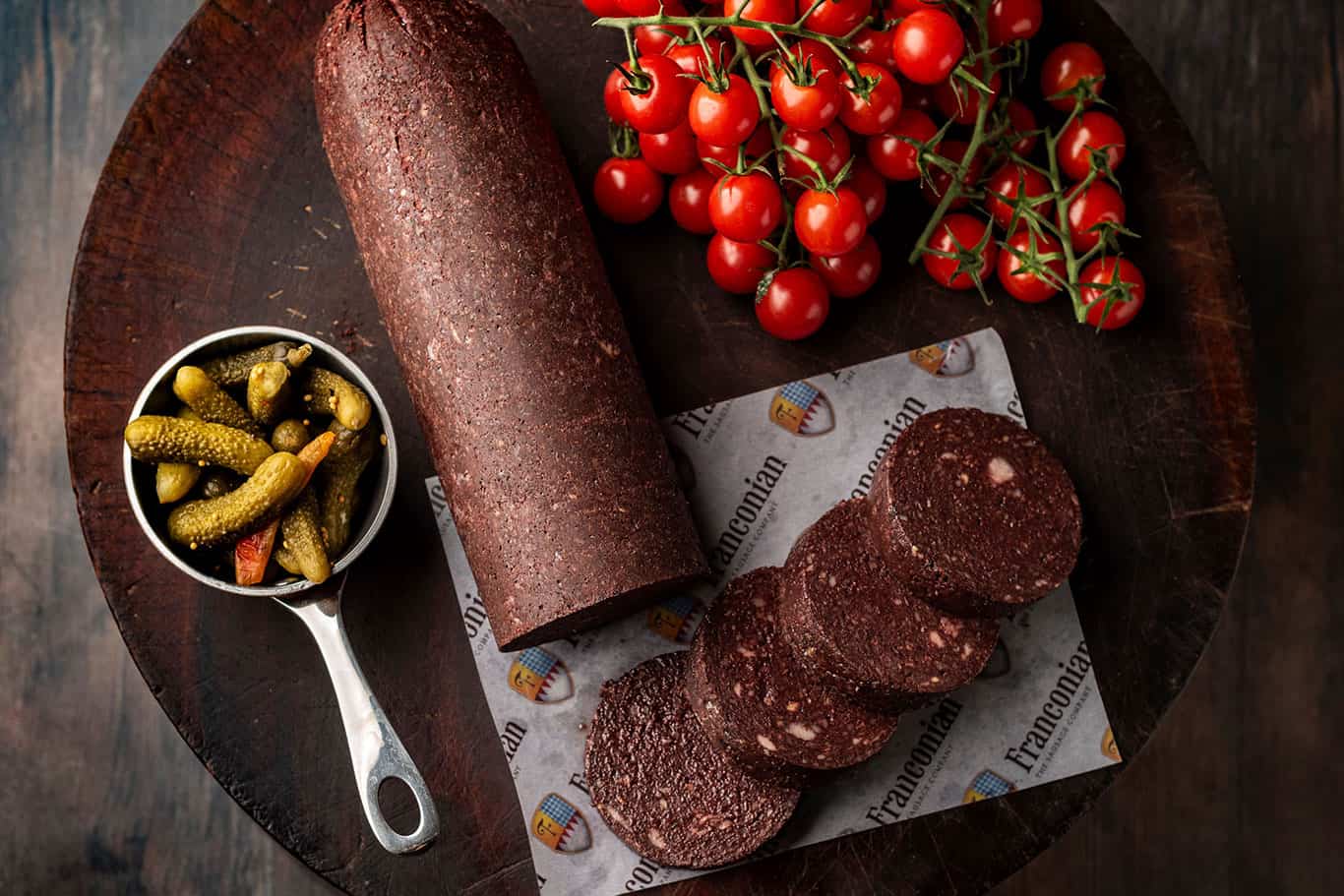
Franconian Sausage Co. specialises in premium sausages with meat contents typically ranging from 90% to 98%.
This emphasis on meat content is relevant when considering where the protein in a sausage comes from.
However, a higher meat percentage should not automatically be interpreted as a guarantee of higher protein or lower fat.
Different cuts of meat have different proportions of protein and fat. The finished nutritional composition still needs to be assessed using the individual product specification.
Protein in vegan sausages
Vegan sausages can contain protein from several different sources.
Soya is particularly useful because it provides all essential amino acids. Pea protein also offers a substantial protein contribution, although its amino acid balance differs from soya.
Other products use wheat gluten, mycoprotein or combinations of beans, lentils and grains.
The NHS advises people following vegetarian diets to include varied protein sources to obtain an appropriate mixture of amino acids.
A protein-rich vegan sausage can therefore make a useful contribution to daily protein intake.
However, a sausage made primarily from vegetables, starches and oils may provide considerably less.
Which is better for protein?
If protein intake is your main priority, compare the actual protein content per 100g and per serving.
Do not assume that all meat sausages contain more protein than all vegan alternatives.
A well-formulated soya-based sausage may compare favourably with some conventional sausages, while a high-meat-content product may provide substantially more protein than a vegetable-based alternative.
The nutritional label gives a much clearer answer than the category name.
Are vegan sausages lower in saturated fat?
One potential nutritional advantage of some plant-based sausages is their saturated fat content.
Many vegan sausages use vegetable oils such as rapeseed or sunflower oil, which contain a higher proportion of unsaturated fats.
Replacing saturated fats with unsaturated fats can be beneficial for cardiovascular health when considered as part of the overall diet.
However, not all plant-based fats have the same composition.
Why the type of oil matters
Some vegan meat alternatives use coconut oil or palm oil to achieve a texture and mouthfeel similar to animal fat.
These ingredients can increase the saturated fat content of the finished product.
Consequently, a vegan sausage containing coconut oil may have more saturated fat than expected.
A meat sausage made with leaner cuts, meanwhile, may contain less fat than a richer plant-based product.
The composition of the finished food is more important than assumptions about its ingredients.
How much saturated fat is considered high?
According to NHS food labelling guidance, a food containing more than 5g of saturated fat per 100g is considered high in saturated fat.
A product containing 1.5g or less per 100g is considered low.
These thresholds offer a practical way to compare products.
For example, if one sausage contains 2g of saturated fat per 100g and another contains 7g, there is a meaningful difference regardless of which product is vegan.
This becomes particularly important when sausages are eaten regularly or accompanied by other foods containing substantial quantities of saturated fat.
Are vegan sausages lower in calories?
Not necessarily.
The calorie content of a sausage is determined by its overall composition, particularly the proportions of fat, protein and carbohydrate.
Fat is more energy-dense than protein or carbohydrate, so products containing larger quantities of added oil or animal fat may have a higher calorie content.
A vegetable-based sausage with relatively little added fat may contain fewer calories than a traditional pork sausage.
However, a plant-based sausage formulated to closely imitate the texture and richness of meat may contain more oil and a similar number of calories.
Why portion size changes the comparison
Consider two hypothetical products.
One contains 180 calories per 100g, while the other contains 240 calories per 100g.
On paper, the first appears substantially lower in calories.
But if the first sausage weighs 120g and the second weighs 75g, the actual calorie intake per sausage is different:
- First sausage: 216 calories
- Second sausage: 180 calories
These are illustrative figures, not nutritional values for particular products.
They demonstrate why comparing both per-100g information and the amount actually eaten matters.
Cooking methods and accompaniments also influence the nutritional value of the finished meal.
A grilled sausage served with vegetables and potatoes will have a different overall nutritional profile from the same sausage served in a buttered roll with cheese and a rich sauce.
How does salt content compare?
Salt is an important consideration for both vegan and meat sausages.
Traditional sausages use salt for seasoning, while some varieties also rely on it as part of their production and preservation methods.
Plant-based sausages also use salt to develop flavour.
Because some plant proteins have relatively mild flavours, manufacturers may use combinations of salt, spices, yeast extracts and other ingredients to achieve a more savoury result.
However, this does not mean vegan sausages are always saltier.
The amount varies between manufacturers and recipes.
How much salt is too much?
The NHS recommends that adults consume no more than 6g of salt per day.
Under UK food labelling guidance:
- More than 1.5g of salt per 100g is considered high.
- 0.3g or less per 100g is considered low.
A serving of sausages can therefore make a noticeable contribution to daily salt intake, particularly when eaten with bread, sauces or other processed foods.
For example, a 150g serving of sausages containing 1.8g of salt per 100g would provide 2.7g of salt.
That represents 45% of the recommended daily maximum for an adult.
This is a useful reminder that salt content can matter even when a product is relatively low in saturated fat.
Do vegan sausages provide more fibre?
Fibre is one area where certain vegan sausages can have an advantage.
Animal meat does not naturally contain dietary fibre.
Plant-derived ingredients, particularly pulses, wholegrains and vegetables, can contribute fibre to the finished sausage.
A product containing lentils, beans or wholegrains may therefore provide more fibre than a conventional meat sausage.
However, the amount depends on how the ingredients have been processed.
Why not all vegan sausages are high in fibre
Highly refined protein ingredients do not necessarily retain the same fibre content as the original whole foods.
For example, a sausage made using concentrated plant protein, refined starches and added oils may contain relatively little fibre.
By contrast, one made using whole lentils, beans and vegetables may contribute more.
The best approach is to check the nutritional information rather than assuming the word ‘plant-based’ indicates a high-fibre product.
For people who want to increase dietary fibre, the rest of the meal is also important.
Serving sausages with beans, vegetables or wholegrain bread can contribute additional fibre regardless of the sausage type.
Which vitamins and minerals do meat and vegan sausages provide?
Meat and plant-based sausages can contribute different micronutrients.
The key differences include vitamin B12, iron and zinc.
Vitamin B12
Vitamin B12 contributes to the normal functioning of the nervous system and the formation of healthy red blood cells.
Meat naturally contains vitamin B12.
Vegan sausages do not naturally provide the same source unless ingredients have been fortified or contain added B12.
Some plant-based alternatives are fortified, but others are not.
For people following a fully vegan diet, the NHS advises ensuring a reliable supply of vitamin B12 through fortified foods or supplements.
It would therefore be unwise to assume that simply replacing meat sausages with vegan sausages provides equivalent micronutrient intake.
Iron
Meat provides haem iron, which is generally absorbed more readily by the body than the non-haem iron found in plant foods.
Some vegan sausage ingredients, particularly pulses and soya, naturally contain iron.
However, the amount and its absorption can vary.
Combining plant-based iron sources with vitamin C-rich foods can help improve iron absorption.
For example, a vegan sausage meal containing peppers, broccoli or a tomato-based sauce may provide a useful combination.
Zinc
Meat is a source of zinc, which contributes to normal immune function and other important processes.
Plant-based ingredients such as beans, wholegrains, nuts and seeds can also provide zinc.
As with iron, however, the amount present in the food and how readily it is absorbed can differ.
The important principle is dietary variety.
Neither a meat sausage nor a vegan sausage should be expected to supply every essential nutrient independently.
Does a higher meat content make a sausage healthier?
A high meat percentage can be a useful indicator of what a sausage contains, but it does not provide a complete picture of nutritional quality.
A sausage containing 95% meat is clearly different in composition from one containing a much smaller proportion of meat alongside cereals, starches or other ingredients.
However, meat content alone does not establish the amount of saturated fat, salt or calories.
For example, a sausage containing a high proportion of fatty pork could have more saturated fat than one made using leaner meat.
Similarly, a product made using a high proportion of chicken may have a different nutritional composition from a pork sausage.
Franconian’s approach is to produce premium sausages using high-quality ingredients and authentic recipes developed in-house, without additives, fillers, artificial colours or flavourings.
This provides useful information about production standards and ingredients.
It should not, however, be confused with a specific nutritional or health claim.
The most meaningful way to assess any particular Franconian product is to consider its ingredients alongside its nutritional specification and intended portion size.
Are vegan sausages less processed than meat sausages?
Not necessarily.
Processing is not exclusive to animal-based foods.
A vegan sausage may involve extracting protein from plants, combining ingredients with oils and binders, developing flavour and forming the mixture into a sausage shape.
Traditional sausages also involve processing, including mincing, seasoning, mixing and filling casings.
The degree and purpose of processing can differ substantially between individual products.
Does processing automatically make a food unhealthy?
No. Processing is a broad term covering many techniques, and it does not establish the nutritional quality of a food by itself.
However, there is a relevant distinction when considering red and processed meat.
The NHS advises limiting red and processed meat consumption because eating too much is associated with an increased risk of bowel cancer.
Its guidance recommends that people consuming more than 90g of cooked red or processed meat daily should reduce their average consumption to 70g.
This is an important consideration when comparing meat sausages with plant-based alternatives.
Replacing some red or processed meat meals with suitable plant-based protein sources can support a more varied diet.
Nevertheless, that does not mean every commercially produced vegan sausage is automatically a nutritionally superior choice.
Salt, saturated fat, fibre and overall dietary balance still matter.
How can you compare two sausages fairly?
A useful comparison starts with two specific products rather than broad categories.
Imagine choosing between a pork sausage and a vegan alternative for a family meal.
Instead of relying on marketing claims, compare their nutritional labels using the same basis.
| Nutritional factor | What to check |
|---|---|
| Protein | Grams per 100g and per serving |
| Calories | Energy per 100g and portion size |
| Saturated fat | Amount per 100g, regardless of fat source |
| Salt | Contribution towards the daily recommended maximum |
| Fibre | Amount supplied by the finished product |
| Micronutrients | Naturally occurring or added vitamins and minerals |
| Ingredients | Main protein source, fats and other ingredients |
This approach also helps clarify priorities.
Someone trying to reduce saturated fat might select the product with the lower saturated fat content.
Someone wanting to increase protein intake might prioritise protein per serving.
Someone following a vegan diet will need to consider whether the product fits their dietary requirements and contributes useful nutrients.
There is no reason to expect all three people to make the same choice.
Which type of sausage is better for different dietary needs?
The answer depends on what the individual is trying to achieve.
For someone reducing meat consumption
A vegan sausage can provide a convenient alternative to conventional sausages.
However, choosing products with favourable levels of salt and saturated fat remains important.
It may also be useful to include other plant proteins such as lentils, beans and tofu rather than relying exclusively on meat substitutes.
For someone prioritising protein
Both meat and suitably formulated vegan sausages can contribute protein.
Meat products naturally provide complete protein, while soya-based products can also provide all essential amino acids.
The nutritional label is the most useful comparison tool.
For someone reducing saturated fat
Compare individual products rather than assuming that vegan always means lower fat.
Look for sausages containing relatively little saturated fat and consider whether the wider meal contains cheese, butter or rich sauces.
For someone with allergies or intolerances
Ingredient checking is essential.
Some vegan sausages contain soya or wheat gluten. Some meat sausages contain cereals, milk or other allergens.
Franconian produces a range in which the vast majority of products are gluten free, but suitability should always be confirmed using the specification for the exact product.
A vegan label alone does not guarantee that a sausage is gluten free or suitable for every dietary requirement.
How much difference does the rest of the meal make?
The nutritional value of a meal depends on considerably more than its main protein.
A vegan sausage served with chips, a large white roll and several salty sauces is not automatically a healthier meal than a meat sausage served with vegetables and potatoes.
Equally, a plant-based sausage accompanied by beans, wholegrains and vegetables may provide a nutritious and satisfying meal.
Consider how sausages are prepared and served.
Grilling or oven cooking may allow some products to be prepared without substantial additional fat, depending on their cooking instructions.
Vegetables can contribute vitamins, minerals and fibre, while wholegrain carbohydrates can improve the overall nutritional balance.
Portion size and frequency are also important.
Even a product with an appealing nutritional profile should be considered as one component of the wider diet.
Frequently Asked Questions
Are vegan sausages good for weight loss?
Some vegan sausages contain fewer calories than conventional meat sausages, but others are similar or higher. Weight management depends on overall energy intake and dietary habits, so compare calories per portion rather than relying on whether a product is plant-based.
Are vegan sausages high in protein?
Some are. Products made using soya, pea protein or mycoprotein can provide substantial protein, while vegetable-based varieties may contain considerably less. Check the nutritional label for the exact amount.
Do vegan sausages contain cholesterol?
Plant-based ingredients do not naturally contain cholesterol. However, this does not automatically make a vegan sausage healthier, as saturated fat and other nutritional factors still influence cardiovascular health.
Are vegan sausages suitable for a gluten-free diet?
Not all vegan sausages are gluten free. Some contain wheat gluten as a primary protein ingredient, while others use soya, peas or different plant proteins. Always check the ingredient list and allergen information.
Can meat sausages be part of a balanced diet?
Yes, meat sausages can be included within a varied diet, although UK health guidance recommends limiting red and processed meat consumption. Choosing appropriate portions, checking salt and saturated fat, and balancing meals with vegetables and other foods are sensible considerations.
So, are vegan sausages healthier than meat sausages?
There is no universal winner in the comparison between vegan and meat sausages.
Some plant-based products offer nutritional advantages through lower saturated fat content, additional fibre or a different balance of ingredients.
Meat sausages naturally provide valuable nutrients including protein, vitamin B12, iron and zinc.
However, neither category guarantees a particular nutritional profile.
The most useful approach is to compare actual products, consider the quantities you eat and make choices that fit your overall dietary needs.
A good sausage should also deliver flavour, texture and enjoyment, rather than being judged exclusively on a single nutritional figure.
Franconian Sausage Co. specialises in premium meat sausages and speciality meat products, using carefully developed recipes and high-quality ingredients. Its range includes products for restaurants, caterers, trade customers and members of the public.
For more information about Franconian’s products, ingredients or available specifications, contact the team.
Phone: 01892 837816
Email: orders@franconian.co.uk
Find out more: https://franconian.co.uk/