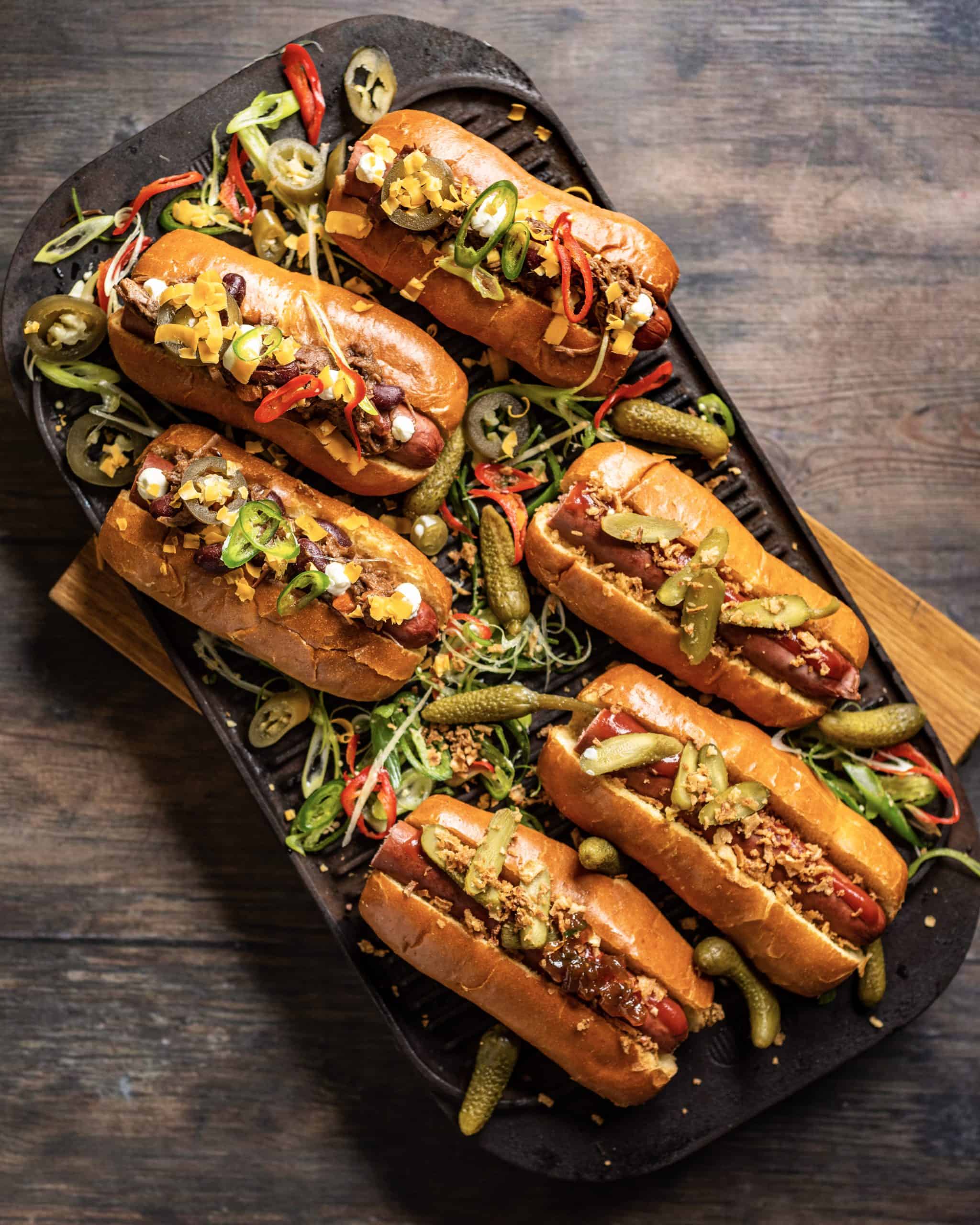
Hot dogs usually split when cooked because heat causes the moisture, fat and air inside them to expand. When the internal pressure becomes greater than the casing can withstand, the skin tears open.
This is particularly likely to happen when hot dogs are cooked too quickly, exposed to very high temperatures or left in the pan or water for too long. The casing tightens while the filling expands, eventually creating the familiar split along the side of the sausage.
A split hot dog is not necessarily ruined. It will normally still be safe to eat if it has been stored and cooked correctly. However, splitting can allow moisture and fat to escape, leaving the hot dog drier and less evenly cooked.
Understanding why this happens makes it easier to choose a cooking method that warms the hot dog thoroughly while protecting its texture, flavour and appearance.
What causes a hot dog casing to burst?
A hot dog consists of a seasoned meat mixture enclosed within a casing or formed outer surface. Depending on the product, the casing may be natural, collagen-based, cellulose-based or created during processing without a separate skin.
When the hot dog is heated, several changes happen at once.
The water in the meat mixture becomes hotter and begins to expand. Fat softens and renders, while small pockets of air and steam also increase in volume. At the same time, the proteins in the filling contract and firm up.
The casing must stretch enough to accommodate these changes. If the internal pressure rises faster than the casing can expand, the weakest point tears.
Several factors can increase the likelihood of this happening:
- Cooking at an excessively high temperature
- Heating the hot dog for longer than necessary
- Moving it directly from a cold fridge into intense heat
- Using a damaged or dried-out casing
- Allowing a pan or grill to become too hot
- Boiling the hot dog vigorously rather than warming it gently
The quality and construction of the hot dog also affect how it behaves. A well-made sausage should have a casing that holds the filling securely while still allowing a little expansion. However, even a high-quality product can split if it is subjected to sudden or excessive heat.
Does cooking temperature make hot dogs split?
Temperature is one of the main reasons hot dogs burst.
Hot dogs are generally already cooked during production, although consumers should always check the packaging and follow the manufacturer’s instructions. In most cases, home cooking is primarily about reheating the product thoroughly and creating the desired colour or texture.
Because the hot dog does not usually need prolonged cooking, extremely high heat can do more harm than good.
What happens when the heat is too high?
When a chilled hot dog is placed directly into a very hot frying pan, oven or grill, the outside heats much faster than the centre.
The casing tightens and begins to dry, while the moisture inside turns into steam and expands. The pressure builds until the skin breaks.
A similar problem occurs when hot dogs are placed into rapidly boiling water. The vigorous heat can cause the casing to contract and burst before the centre has warmed evenly.
Moderate heat gives the hot dog more time to warm gradually. This reduces the difference between the internal and external temperatures, limiting pressure against the casing.
Can hot dogs split because they are overcooked?
Even at a moderate temperature, hot dogs can split if they are cooked for too long.
As the filling continues to heat, moisture is driven towards the surface. The casing becomes increasingly tight and may eventually tear. Once the hot dog has split, juices and rendered fat can escape into the pan, grill or cooking water.
Overcooking can also create a rubbery casing and a dry, dense centre. Rather than relying only on a timer, look for signs that the hot dog is heated through, lightly coloured and beginning to plump.
It should not be allowed to shrivel, blister heavily or develop deep cracks.
Should you pierce hot dogs before cooking?
Piercing a hot dog may appear to be a simple way to prevent splitting. Small holes can release pressure as the filling heats, potentially stopping the casing from bursting unpredictably.
However, piercing is not usually the best approach.
The same holes that release steam also allow moisture and fat to escape. This can reduce juiciness and flavour, particularly when the hot dogs are grilled, fried or roasted.
There is also little need to pierce them when they are cooked gradually at an appropriate temperature. Controlling the heat is more effective than deliberately damaging the casing.
When might scoring a hot dog be useful?
Scoring is different from repeatedly piercing the casing with a fork.
Some people make a few shallow diagonal cuts in the surface before grilling or frying. This can create additional browned edges and may help prevent one large split by giving the casing controlled places to open.
Scoring can work well when appearance and caramelisation are more important than retaining every drop of moisture. However, the cuts should remain shallow. Cutting deeply into the centre can cause the filling to dry out.
Uncut hot dogs are generally preferable when the aim is a smooth appearance and juicy texture.
What is the best way to cook hot dogs without splitting?
The best cooking method depends on whether you prefer a soft casing, a lightly browned surface or a smoky grilled finish. In every case, the most important principle is to use controlled heat.
How to warm hot dogs gently in water
Simmering is one of the easiest ways to heat hot dogs evenly without splitting them.
Bring a pan of water close to a simmer, then reduce the heat before adding the hot dogs. The water should be hot, but it should not be boiling aggressively.
Allow the hot dogs to warm gently until they are piping hot throughout, following any cooking guidance on the packaging. Avoid leaving them in the water once they are ready, as prolonged heating can still cause the casing to split.
This method produces a soft, evenly heated hot dog. It does not create browning, but the sausages can be transferred briefly to a warm pan or grill afterwards if additional colour is wanted.
Should you boil hot dogs?
It is better to simmer hot dogs than boil them.
Rapidly bubbling water moves the sausages around the pan and exposes the casings to intense heat. This makes splitting more likely and may draw flavour into the cooking water.
A gentle simmer provides enough heat without creating the same level of pressure.
How to cook hot dogs in a frying pan
Pan cooking can produce a lightly crisp, browned surface.
Add a small amount of oil to a frying pan and use a low to medium heat. Place the hot dogs in the pan and turn them regularly so that the surface colours evenly.
Avoid leaving one side against the hot pan for too long. A concentrated patch of heat can weaken the casing and cause it to split at that point.
A small splash of water can also be added to the pan. Covering it for the first few minutes creates steam, helping the centre warm gently. The lid can then be removed so the surface browns.
This combination method is useful when you want both an evenly heated centre and an appetising finish.
How to grill hot dogs without bursting them
Grilling gives hot dogs a deeper flavour and attractive surface marks, but it also creates a greater risk of splitting.
Preheat the grill to a moderate rather than extreme temperature. Position the hot dogs away from the fiercest heat and turn them frequently.
Do not wait for the skin to blacken before moving them. Dark grill marks can develop quickly, while the centre may still be comparatively cool.
Indirect heat is particularly helpful on a barbecue. Begin by warming the hot dogs away from the strongest flames or coals. They can then be moved closer to the heat briefly to create colour.
Flare-ups should be avoided. When fat drips onto a flame, sudden bursts of heat can scorch the casing and cause it to rupture.
Can you cook hot dogs in the oven?
Hot dogs can be cooked in the oven, especially when preparing several portions at once.
Place them on a baking tray and cook at a moderate temperature, turning them partway through. Avoid using an unnecessarily high oven setting, which may dry the surface before the middle is fully heated.
Oven cooking creates more even heat than direct grilling, although the hot dogs can still split if they are left in for too long.
A lightly covered tray can help retain moisture during the first part of cooking. The covering can then be removed briefly if a more roasted finish is preferred.
Does starting temperature affect splitting?
A very cold hot dog placed directly into intense heat is more likely to split because the outside and centre warm at different rates.
Allowing refrigerated hot dogs to stand at room temperature for a short period can reduce this temperature difference. However, they should not be left out for an extended time, particularly in warm conditions.
Food safety remains more important than preventing a split casing.
A safer alternative is to start with a gentle cooking method. For example, the hot dogs can be warmed in hot water before being finished briefly in a pan or on a grill.
This staged approach prevents the surface from being exposed to intense heat while the centre is still cold.
Does the type of casing make a difference?
Different casings react differently when heated.
Natural casings are traditionally made from cleaned animal intestines. They are valued for their texture and distinctive snap, but they can split when exposed to excessive heat.
Collagen casings are designed to provide consistency in shape and strength. They can still tear, particularly if they become dry or are cooked too quickly.
Some hot dogs are produced in cellulose casings that are removed before sale, leaving a skinless product. These may not burst in exactly the same way as a cased sausage, although their outer surface can still crack during overcooking.
Storage can also affect the casing. If hot dogs are left uncovered in the fridge, the surface may dry out. A dried casing has less flexibility and is more likely to crack when heated.
Always store the product in accordance with the packaging instructions and use it within the recommended period.
Are split hot dogs still safe to eat?
A hot dog splitting during cooking does not automatically make it unsafe.
The split is normally a physical reaction to heat and pressure rather than a sign that the product has spoiled. Provided the hot dog was stored correctly, remained within its use-by date and was cooked according to the packaging instructions, it should usually be safe to eat.
However, the opening can affect quality.
Juices may escape, creating a drier texture. The exposed filling can also brown or char more quickly than the rest of the hot dog. On a barbecue, dripping fat may cause flames that scorch the opened section.
Food safety should be assessed separately from appearance. Discard hot dogs that have an unusual smell, discolouration, slimy texture or damaged packaging before cooking.
When serving children, older people, pregnant women or people with weakened immune systems, follow the product’s cooking guidance carefully and ensure the hot dogs are thoroughly heated.
What should you do if the hot dogs begin to split?
If you notice the casing starting to crack, reduce the heat immediately.
Remove the pan from the hob briefly, move the hot dogs to a cooler part of the grill or lower the oven temperature. Turning them can prevent one area from continuing to receive concentrated heat.
The hot dogs may already be hot enough to serve, so check their condition rather than continuing automatically for the full planned cooking time.
Once a hot dog has split, further cooking will generally cause more moisture to escape. Remove it from the heat as soon as it has been heated safely.
A small split can sometimes be used to your advantage. The exposed edge will brown quickly, creating additional flavour. The key is to prevent the entire casing from opening and the centre from becoming dry.
Common mistakes that make hot dogs split
Most split hot dogs can be traced back to a few common cooking mistakes.
The first is treating them like raw, thick sausages that require lengthy cooking. Many hot dogs and frankfurters have already been cooked, so they only need thorough reheating.
Another mistake is assuming that a hotter pan will produce better browning. Excessive heat often burns the casing before creating an evenly warmed centre.
Leaving hot dogs unattended is also a problem. They cook quickly and need to be turned regularly when fried or grilled.
Finally, piercing them repeatedly with a fork can cause unnecessary moisture loss. Use tongs or a spatula to turn them instead.
Frequently Asked Questions
Why do hot dogs split in the microwave?
Microwaves heat moisture rapidly, which can create steam and pressure inside the hot dog. The casing may split if the hot dog is heated at full power for too long. Use shorter heating intervals, follow the packaging guidance and allow a brief standing period so the heat can distribute evenly.
Should hot dogs float when they are cooked?
Floating is not a reliable way to judge whether a hot dog is ready. Air, fat content and product density can all affect whether it rises in water. Follow the recommended cooking time and ensure the hot dog is piping hot throughout.
Why do hot dogs shrivel after cooking?
Hot dogs shrivel when moisture and fat escape during prolonged or high-temperature cooking. As the filling loses moisture, it contracts and the casing wrinkles. Gentle heating and prompt serving help maintain a plump texture.
Can you put hot dogs straight into boiling water?
You can place them in hot water, but a vigorous rolling boil is unnecessary and increases the chance of splitting. Reduce the heat to a gentle simmer before adding the hot dogs.
Is it better to steam or boil hot dogs?
Steaming and gentle simmering can both produce evenly heated hot dogs. Steaming may retain slightly more flavour because the product is not submerged in water. Whichever method you choose, avoid excessive heat and prolonged cooking.
How to keep hot dogs juicy and intact
Hot dogs split because the filling expands faster than the casing can accommodate it. High temperatures, sudden heat and overcooking all increase the internal pressure and weaken the outer skin.
For the best results, warm hot dogs gradually using hot water, steam or a moderately heated pan. Turn them regularly, avoid repeatedly piercing the casing and remove them from the heat once they are thoroughly warmed.
A split hot dog is usually still perfectly edible, but careful temperature control will produce a juicier texture, neater appearance and more consistent result.
Franconian Sausage Co. produces premium sausages and speciality meat products using high-quality ingredients, authentic recipes and carefully controlled production methods. Products are freshly made to order, with bespoke options available for restaurants, caterers, trade customers and members of the public.
Phone: 01892 837816
Email: orders@franconian.co.uk
Find out more: https://franconian.co.uk/