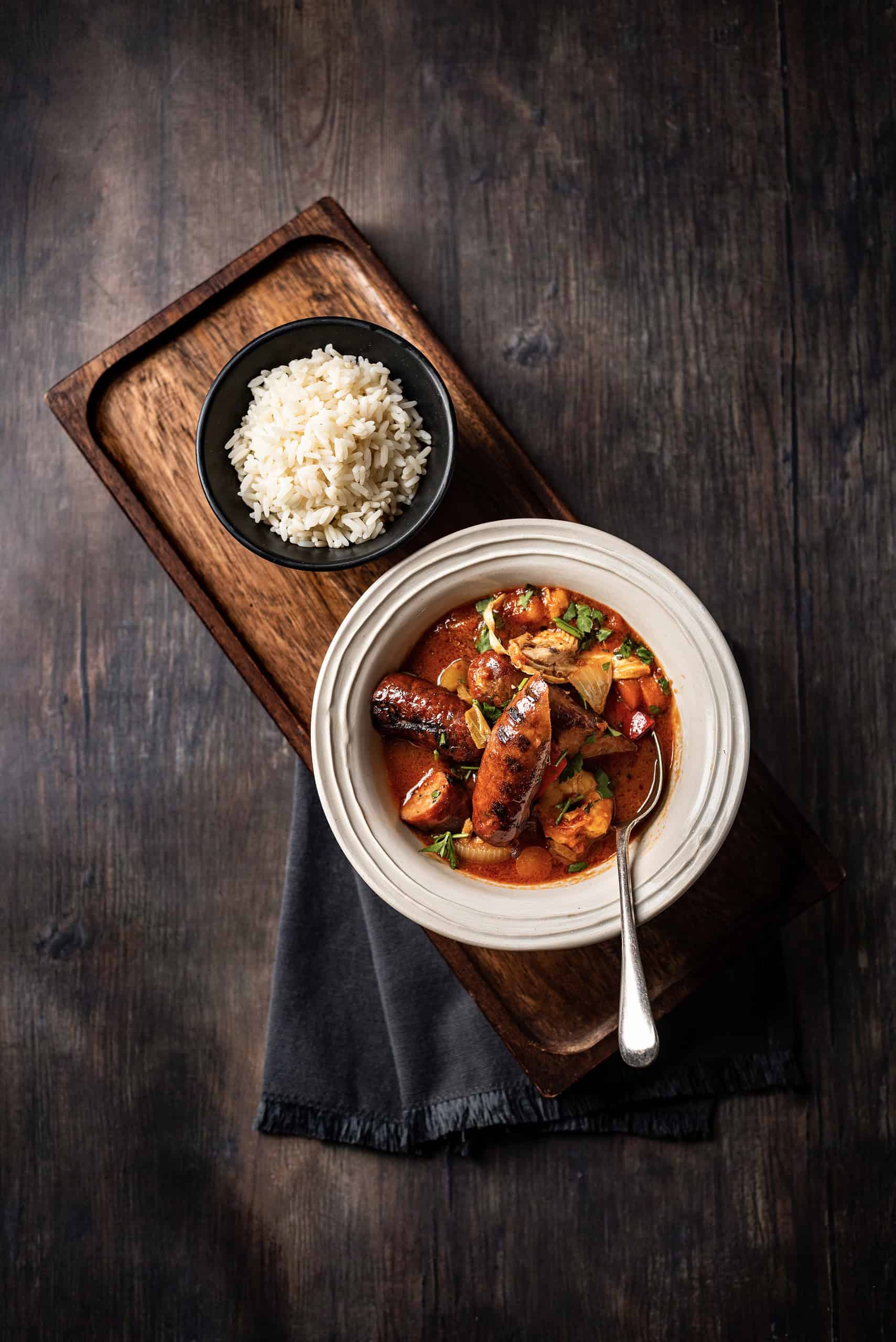
Frankfurters are associated with German cuisine because their name comes directly from Frankfurt am Main, where thin, lightly smoked pork sausages have been part of the local food tradition for generations.
The German name Frankfurter Würstchen essentially means small Frankfurt sausages. Within Germany, the term has historically carried a geographical meaning rather than simply describing any long, thin sausage.
Traditional Frankfurt sausages are generally made from finely prepared pork, seasoned relatively mildly, placed in slender casings and smoked. They are usually warmed gently in hot water rather than fried aggressively.
Their international story is more complicated. Sausages inspired by German and Austrian traditions travelled to other countries, where names including frankfurter, wiener and hot dog began to overlap. As recipes were adapted to suit local tastes and manufacturing methods, the word “frankfurter” came to describe a wider family of sausages.
Despite these changes, the connection with Germany remains strong. The sausage takes its name from a German city, reflects a long German tradition of regional sausage-making and remains part of Frankfurt’s recognised culinary identity.
Did frankfurters originate in Frankfurt?
The name certainly links the sausage to Frankfurt am Main, a major German city with a long history as a centre of commerce and trade.
Frankfurter sausages are recognised by the city itself as one of Frankfurt’s traditional culinary specialities. Frankfurt’s official city information states that the name Frankfurter Würstchen has been protected in Germany as a geographical indication since the nineteenth century. A legal decision in 1929 further established that only sausages produced within the Frankfurt economic area could use the name in the protected German context.
This does not mean that Frankfurt was the first place where anybody made a thin pork sausage. Sausage-making had been practised across Europe for centuries, and many cities developed their own regional recipes.
What made the frankfurter distinctive was the combination of its place of production, established recipe, slender form and lightly smoked character.
Regional names were important in traditional food culture. Before modern refrigeration and national supermarket distribution, recipes often developed around locally available ingredients, butchery practices and preservation methods.
A sausage associated with Frankfurt could therefore develop a clear local identity, just as other German regions became known for their own distinctive sausages.
Why was Frankfurt suited to developing a recognised sausage?
Frankfurt has historically been an important meeting point for trade and travel.
The city stood at the intersection of European trading routes and developed a prominent commercial role over many centuries.
Trade centres naturally created opportunities for food producers. Markets, fairs, travellers and growing urban populations all generated demand for food that could be prepared consistently and sold conveniently.
Sausages were particularly useful because they allowed butchers to turn carefully selected meat and fat into a portioned product with a defined shape and flavour.
Smoking also helped preserve food before refrigeration became widely available. Although smoking alone did not make every sausage indefinitely shelf-stable, it helped manage moisture, affected the surface and produced a recognisable flavour.
A slender smoked sausage could be transported, reheated and served relatively easily. These practical qualities contributed to the wider appeal of frankfurter-style sausages.
What is a traditional German frankfurter made from?
A traditional Frankfurter Würstchen is commonly described as a slender sausage made predominantly from pork.
The meat is finely prepared and mixed with fat, salt and restrained seasoning. It is then filled into a narrow casing and smoked.
The exact recipe varies between producers, and regional definitions may be more specific than the general use of the word “frankfurter” in Britain.
Typical features include:
- Finely prepared pork
- A smooth, even interior
- Slender natural casing
- Mild seasoning
- Light smoky flavour
- A curved or paired presentation
- Gentle heating before serving
The flavour is normally more delicate than that of a heavily spiced fresh sausage. Smoke, pork and seasoning should work together without one element overwhelming the others.
Why are the casings important?
The casing helps give the sausage its traditional narrow shape and characteristic bite.
Natural casings can create a slight snap when bitten. This contrast between the casing and smooth filling is part of the eating experience.
The narrow shape also means the sausage heats quickly. It does not usually require the same cooking time as a thick raw British pork sausage.
Modern frankfurter-style products may use natural, collagen or other casings. Some mass-produced versions are manufactured in removable casings and sold without a separate skin.
These differences affect texture, even when the products look broadly similar.
How are traditional frankfurters made?
The production process begins with selecting and preparing the pork.
The meat and fat are finely minced or emulsified to create the smooth texture associated with the sausage. Salt and seasonings are distributed throughout the mixture before it is filled into narrow casings.
The sausages may then be linked in pairs and smoked.
Smoking contributes colour, aroma and flavour. Depending on the producer, different woods and smoking times can produce anything from a very subtle smokiness to a more obvious cured character.
The sausages are also cooked or heated during production. This is why many packaged frankfurter-style products are sold as ready-cooked sausages that require reheating rather than full cooking from raw.
However, consumers should always check the label. The term “frankfurter” is used for many different products outside the traditional German geographical definition, and their cooking requirements are not necessarily identical.
Why are frankfurters warmed rather than boiled?
Traditional frankfurters are usually heated gently in hot water.
A vigorous boil can cause the casing to split and allow moisture and flavour to escape. It may also produce a tougher outer surface.
A better approach is to bring water close to the boil, remove it from the strongest heat and then allow the sausages to warm gradually.
The intention is to heat the sausage without subjecting it to the harsh treatment needed for raw meat.
This method preserves:
- The smooth interior
- Moisture within the sausage
- The casing’s texture
- The traditional shape
- The balance of smoke and seasoning
The sausage should be served hot, but it should not be left in the water unnecessarily once warmed.
Packaging instructions should take priority, particularly for products made outside Germany or sold specifically for frying and grilling.
How are frankfurters traditionally served in Germany?
Frankfurters are often served simply.
Mustard and bread are classic accompaniments because they complement the sausage without hiding its flavour. Potato salad may also be served alongside them.
The sausages can be presented in pairs, reflecting the traditional linked form in which they are produced.
A typical serving might include:
- Warm frankfurters
- German-style mustard
- Fresh bread or a bread roll
- Potato salad
- Sauerkraut or pickled vegetables
Not every Frankfurt household, restaurant or producer serves them in exactly the same way. German cuisine is regionally diverse, and individual traditions vary.
The important point is that the sausage is often treated as a straightforward speciality rather than buried beneath a large number of toppings.
This differs from some international hot dog styles, where cheese, chilli, onions, sauces and relishes may become the dominant flavours.
Why is mustard such a common accompaniment?
Mustard provides acidity, heat and sharpness, which balance the richness of pork.
German mustards range from mild and sweet to strong and pungent. The most appropriate type depends on the sausage and regional preference.
A mildly smoked frankfurter can be overwhelmed by an extremely hot mustard, so a smoother medium-strength condiment often works well.
Mustard also has practical benefits. It can be served cold, requires no elaborate preparation and pairs naturally with bread and sausages.
This simple combination helped make sausages convenient food for markets, pubs, festivals and informal meals.
What is the difference between a frankfurter and a hot dog?
The terms are often used interchangeably in Britain and other English-speaking countries, but they do not always refer to exactly the same thing.
A traditional Frankfurt sausage is a particular regional style associated with Frankfurt am Main. The term “hot dog” usually refers more broadly to a sausage served hot, commonly inside a split roll.
The sausage inside a hot dog may be described as a frankfurter, wiener or hot dog sausage, but its recipe can vary significantly.
A commercial hot dog may contain:
- Pork
- Beef
- Chicken
- Turkey
- A combination of meats
- Plant-based ingredients
It may be smoked, unsmoked, skinless, heavily seasoned or produced specifically for grilling.
A hot dog is therefore better understood as a dish or serving format, while a traditional frankfurter is a type of sausage.
Why do supermarkets call so many sausages frankfurters?
Outside Germany, the word has become a general product category.
Shoppers often understand “frankfurter” to mean a smooth, narrow, ready-cooked sausage that can be heated quickly. Producers use the familiar name to communicate shape and texture even when the product is not made in Frankfurt.
This wider usage developed as sausage recipes travelled internationally.
The result is that a packet labelled “frankfurters” in a UK supermarket may be inspired by German sausage-making without meeting the traditional Frankfurt geographical definition.
The ingredient list, origin statement and cooking instructions provide more useful detail than the product name alone.
What is the connection between frankfurters and Vienna sausages?
Frankfurter and wiener traditions are closely connected.
Vienna is known as Wien in German, so Wiener Würstchen means small Vienna sausages. In Austria, however, sausages of this general type may be called frankfurters.
One commonly told story credits the butcher Johann Georg Lahner with combining sausage traditions associated with Frankfurt and Vienna. The precise history has been debated and simplified over time, but it reflects how closely the two culinary traditions became linked.
Both sausages are typically slender, finely textured and gently heated. Differences can relate to meat content, regional naming and production rules.
This overlap explains why international shoppers encounter several names for visually similar products:
- Frankfurter
- Wiener
- Vienna sausage
- Hot dog
- Wieners
- Frankfurter-style sausage
The names can indicate historical influence, but they do not guarantee identical ingredients.
How did German frankfurters influence the American hot dog?
Large numbers of German-speaking immigrants moved to the United States during the nineteenth century. They brought food traditions including sausages, bread, mustard, beer and street vending.
Sausages served with bread were practical for busy urban environments. They could be held in the hand, eaten without formal cutlery and sold from carts or stands.
Over time, the sausage-in-a-roll format became closely associated with American sporting events, fairs and city street food.
The recipes were adapted to local tastes and industrial production. Beef versions became common in some communities, while regional toppings created distinct local hot dog styles.
Although the modern American hot dog is not identical to a protected Frankfurt speciality, its development is closely connected to German and Central European sausage traditions.
The word “frankfurter” preserved that association even as the food changed.
Why is Germany so strongly associated with sausages generally?
Germany has an exceptionally varied regional sausage culture.
The broad German word Wurst covers numerous cooked, smoked, cured and fresh products. Recipes developed around local ingredients, religious customs, preservation needs and butchers’ traditions.
Well-known German sausages include:
- Bratwurst
- Bockwurst
- Weisswurst
- Currywurst
- Frankfurter Würstchen
- Nürnberger Rostbratwurst
- Thüringer Rostbratwurst
These are not interchangeable products.
A bratwurst is normally a fresh sausage intended for frying or grilling, although recipes vary widely. Weisswurst is a pale Bavarian sausage traditionally associated with a particular style of serving. Bockwurst is usually smoked and gently heated.
Frankfurters occupy their own place within this much broader culture. Their international fame has helped turn them into a symbol of German sausage-making, but they represent only one regional tradition.
Are all German frankfurters made from pork?
Traditional Frankfurt sausages are closely associated with pork, but Germany also has a recognised beef sausage tradition.
Frankfurter Rindswurst is made from beef and is another speciality linked with Frankfurt. The city’s official culinary information presents it as a distinctive local food with a firm bite and deep red appearance.
Outside Germany, products called frankfurters may contain pork, beef, poultry or mixed meats.
Religious requirements, market preferences, ingredient costs and local food regulations have all contributed to this variety.
Consumers should therefore check the ingredients if meat type is important for dietary, religious or personal reasons.
The word “frankfurter” alone does not provide a reliable guarantee.
Why do frankfurters remain popular today?
Frankfurters combine convenience with a strong culinary identity.
They heat quickly, are easy to portion and work in both simple and elaborate dishes. Their mild flavour also appeals to a wide range of people.
They can be served:
- With mustard and bread
- In hot dog rolls
- With sauerkraut
- Alongside potato salad
- In soups
- With beans
- As part of a barbecue
- Sliced into pasta or rice dishes
Their consistency is another advantage. A well-made frankfurter provides a familiar shape, texture and flavour from one serving to the next.
For catering businesses and restaurants, this can make portion planning straightforward. For home cooks, it provides a convenient ingredient that can be prepared without lengthy cooking.
Their German heritage also adds interest. Consumers are often attracted to foods with an identifiable regional story, particularly when the recipe and production method reflect that origin.
Are frankfurters the same as bratwurst?
No. Frankfurters and bratwurst differ in texture, production and cooking method.
Frankfurters are normally slender, smooth-textured, lightly smoked and cooked during production. They are usually reheated gently.
Bratwurst is a broad category of German fresh sausages. It is often coarser, unsmoked and intended to be fried or grilled until thoroughly cooked.
There are many regional bratwurst varieties, so the term does not describe one universal recipe.
The differences can be summarised as follows:
Frankfurters generally have:
- A fine, smooth texture
- A narrow shape
- A smoked character
- Pre-cooked preparation
- Gentle reheating instructions
Bratwurst generally has:
- A fresh sausage texture
- A thicker or regionally varied shape
- Less emphasis on smoke
- A requirement for full cooking
- Strong regional differences
Both belong to German sausage culture, but they create different eating experiences.
How can you recognise a high-quality frankfurter?
Appearance alone cannot confirm quality.
A good frankfurter should have a balanced recipe, a clean flavour and a pleasing texture. The casing should hold the filling securely without being excessively tough.
Consider the following points:
- Clearly stated meat content
- Identifiable meat source
- Straightforward cooking instructions
- Information about smoking or preparation
- A balanced ingredient list
- Appropriate storage guidance
- A producer with clear traceability standards
Higher meat content can contribute to a firmer, more substantial texture, although the complete recipe still matters.
Seasoning and smoke should complement the meat. An excessively salty or artificial-tasting product may lack the balance associated with carefully produced sausages.
Frequently Asked Questions
Are frankfurters German or Austrian?
The name frankfurter refers to Frankfurt in Germany, while the closely related wiener refers to Vienna in Austria. The two traditions influenced one another, which is why naming varies between countries.
Are frankfurters already cooked?
Many commercial frankfurters are cooked during production and only need thorough reheating. However, products vary, so always check the preparation instructions on the packet.
Should you fry frankfurters?
Frankfurters can often be fried, but gentle warming in hot water is the more traditional method for Frankfurt-style sausages. Excessive heat can split the casing and dry the filling.
Why are frankfurters sold in jars and tins?
Their cooked preparation and uniform shape make them suitable for preservation in brine. Jarred and tinned products are convenient, but their texture may differ from freshly produced smoked frankfurters.
Are frankfurters gluten free?
Some are, but not all. Seasonings, fillers and manufacturing processes vary. Check for an explicit gluten-free statement when this is a dietary requirement.
Why the German association remains so strong
Frankfurters are associated with German cuisine because they are named after Frankfurt am Main and developed as part of the city’s sausage-making tradition.
Their narrow shape, finely prepared pork filling, delicate seasoning and smoked character helped make them distinctive. Their ability to be warmed and served quickly also suited markets, trade centres and informal dining.
As German and Austrian migrants carried their food traditions abroad, frankfurter-style sausages became the foundation for many international hot dogs and wieners. Recipes changed, meat choices broadened and the name became less geographically specific outside Germany.
Even so, the original connection has never disappeared. Frankfurt continues to recognise the sausage as part of its culinary heritage, while the name itself preserves the link every time it appears on a menu or packet.
Franconian Sausage Co. produces premium sausages and speciality meat products using authentic recipes developed in-house. Products are freshly made to order using high-quality ingredients, with bespoke supply available for restaurants, catering businesses, trade clients and members of the public.
Phone: 01892 837816
Email: orders@franconian.co.uk
Find out more: https://franconian.co.uk/